
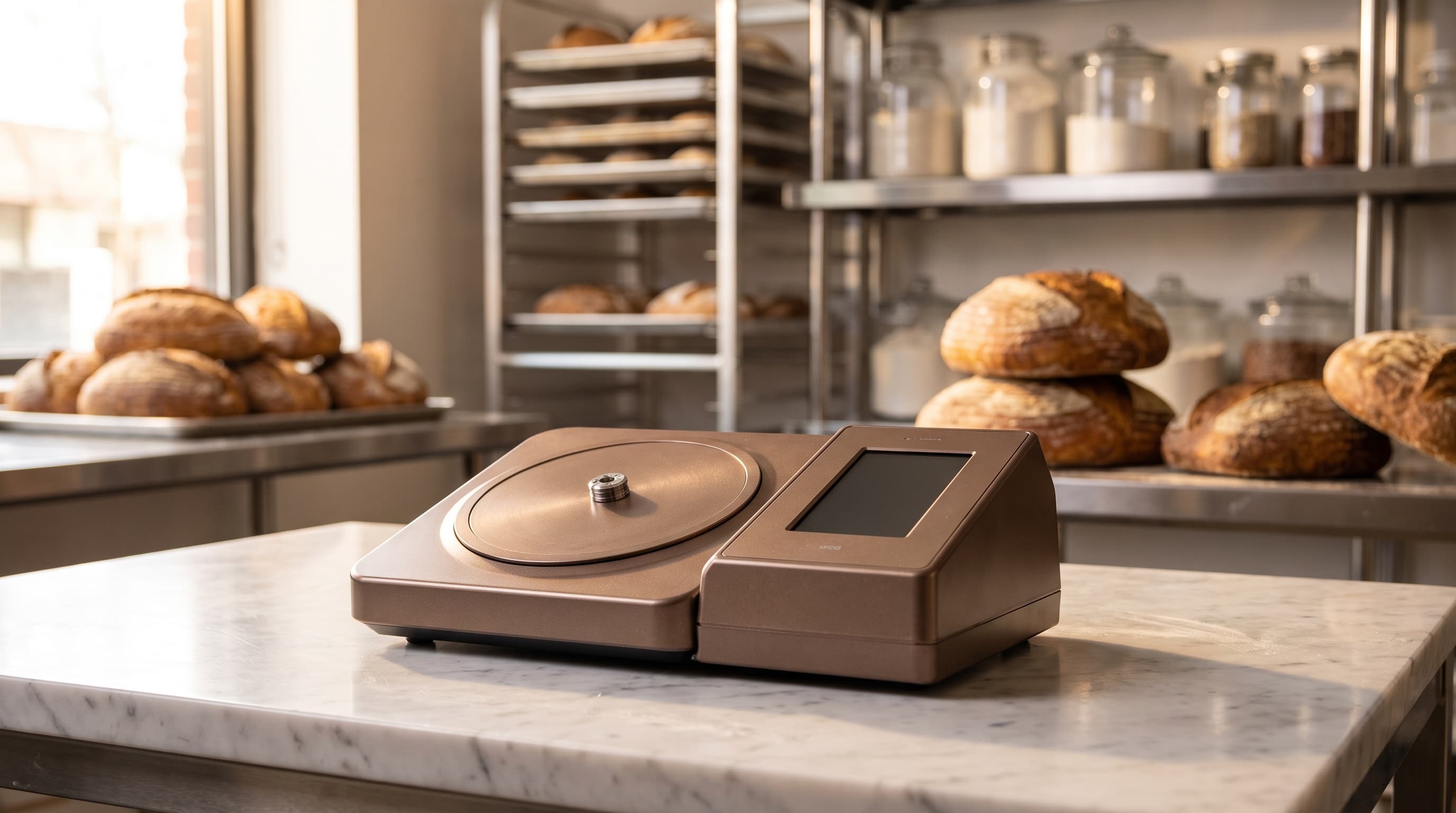
Testing is part of everyday life. Some of it happens at the kitchen table: a rapid COVID test, a glucose meter, a test strip for the pool. Some of it still needs a full laboratory. Checking whether a batch of flour contains gluten, for example, usually means emailing a lab, waiting for a sampling kit, mailing the sample and waiting a week or two for the report.
Plenty of questions fall between those two worlds: too important for a simple strip, too urgent to wait on the mail. Electron paramagnetic resonance, or EPR, is one of the technologies starting to close that gap, making it possible for businesses, and eventually individuals, to run on premises the kinds of measurements that used to require a specialized lab.
The idea behind EPR is simpler than the name. Electrons usually travel in pairs that cancel out each other's magnetism. When one is left on its own, it behaves like a tiny compass needle. In a magnetic field, those lone electrons absorb microwave energy at a very specific point, leaving a signal that works like a fingerprint: it shows what is present and roughly how much. Unpaired electrons turn up in surprisingly ordinary places:
- Cooking oils. As oils break down and turn rancid, oxidation creates free radicals with unpaired electrons.
- Potato chips. The same oxidation process creates free radicals that contribute to stale flavors over time.
- Sun damage. UV rays can trigger free radicals in your skin, contributing to cellular damage and premature aging.
- Tap water. Certain dissolved metals, like copper and manganese, contain unpaired electrons that can be detected using EPR.
- Your phone. Microscopic defects in the silicon inside your phone can contain unpaired electrons, revealing tiny imperfections in the material.
EPR has been a laboratory workhorse for roughly 80 years. What is changing is size. As room-sized instruments shrink toward something that fits on a counter, the question shifts from “what can EPR measure?” to “where can it be measured?”
Direct vs Reagent-Mediated EPR
Some things EPR can read on its own. Others need a little help.
Direct EPR works on anything that already has unpaired electrons, like the radicals and metals above. You place the sample in the sensor and read the signal.
Reagent-mediated EPR covers everything else, which includes most of what we eat. Proteins, sugars and fats generally have no unpaired electrons, so to EPR, flour is essentially invisible. That is actually useful, because the background stays quiet. To find a specific target, scientists attach a spin label, a molecule carrying a stable unpaired electron, to something that seeks out that target, such as an antibody.
Picture a ping-pong ball skittering across a table, then picture it glued to a bowling ball. A labeled antibody on its own moves quickly and gives a sharp signal. When it grabs its target, it becomes part of something much bigger, slows down, and the signal spreads out. The reading comes from how molecules move, not from a color change or a chemical reaction.
Five Ways EPR Could Change Testing
1. Food safety, tested where food is made
- Gluten in flour. A gluten-free bakery could check a flour delivery before it goes into the mixer, instead of mailing a sample away. Because gluten has no unpaired electrons, this uses the reagent-mediated approach: a spin-labeled antibody designed to recognize a protein sequence shared by wheat, rye and barley.
- Stale beer and rancid oil. That cardboard taste in an old beer comes from free radical chemistry. Brewers have used EPR to predict how long a beer will keep its flavor, often before anyone can taste a difference. Similar work has looked at wine and cooking oils.
- Irradiated food. Some spices, dried herbs and meats are treated with radiation to kill bacteria. That leaves a lasting trace in bone, plant fiber and sugar crystals, and EPR is one of the standard methods regulators use to confirm whether a food has been irradiated.
2. Do antioxidants really work?
Oxidation is what rusts a bike chain and browns a cut avocado. In skin, food and supplements, part of that process is driven by free radicals that last only a fraction of a second, which makes them very hard to measure. EPR is one of the few techniques that can detect them directly, using “spin traps” that hold a fleeting radical still long enough to read.
That makes EPR a go-to tool for checking whether a sunscreen, skincare ingredient, food or supplement actually reduces free radicals the way its label suggests.
3. Batteries, chips and plastics
- Phone batteries that fade. Researchers use EPR, sometimes while a battery is charging, to watch how it wears out and to spot metal deposits that can cause lithium batteries to short circuit.
- Computer chips. Tiny defects in silicon affect how reliably a device works and how many good chips come off a production line.
- Sun-faded plastic. A patio chair that turns chalky and brittle after a few summers is breaking down through free radical chemistry. EPR helps manufacturers understand and slow that process.
Compact instruments could bring this work closer to the production line, where catching a problem early is far cheaper than catching it late.
4. Radiation, measured years later
- Teeth as a record. Much as tree rings record a dry year, tooth enamel records radiation exposure. Radiation leaves unpaired electrons in enamel that last for decades, and EPR can read them. This has helped estimate doses in people affected by nuclear accidents.
- Hospitals and sterile supplies. Small pellets of alanine, a simple amino acid, confirm that cancer patients receive the radiation dose their treatment plan calls for, and that syringes and bandages received enough radiation to kill germs. EPR reads the pellet afterward to check the number.
5. Air and water
- Wildfire smoke. Smoke, car exhaust and cigarette smoke carry unusually long-lasting free radicals stuck to tiny particles. Scientists call them environmentally persistent free radicals, and EPR is the main tool for studying them.
- Treated water. Some treatment plants clean water with highly reactive molecules that break pollutants apart. EPR can confirm those molecules are actually forming and doing their job.
- Stained sinks. Copper, iron and manganese, the metals behind pipe corrosion and orange or brown stains, can be detected directly.
Moving Testing to the Point of Decision
None of the physics here is new. What is new is the form factor. When an instrument fits on a counter instead of filling a room, the list of places testing can happen gets much longer.
At Minim Science, we think of miniaturized EPR as a sensing platform, and food is our first application rather than the limit of what it can do. We are starting with gluten in gluten-free bakeries, where knowing what is in the flour matters to everyone who eats what comes out of the oven. If you run a gluten-free bakery and want to join our pilot, we would love to hear from you.