
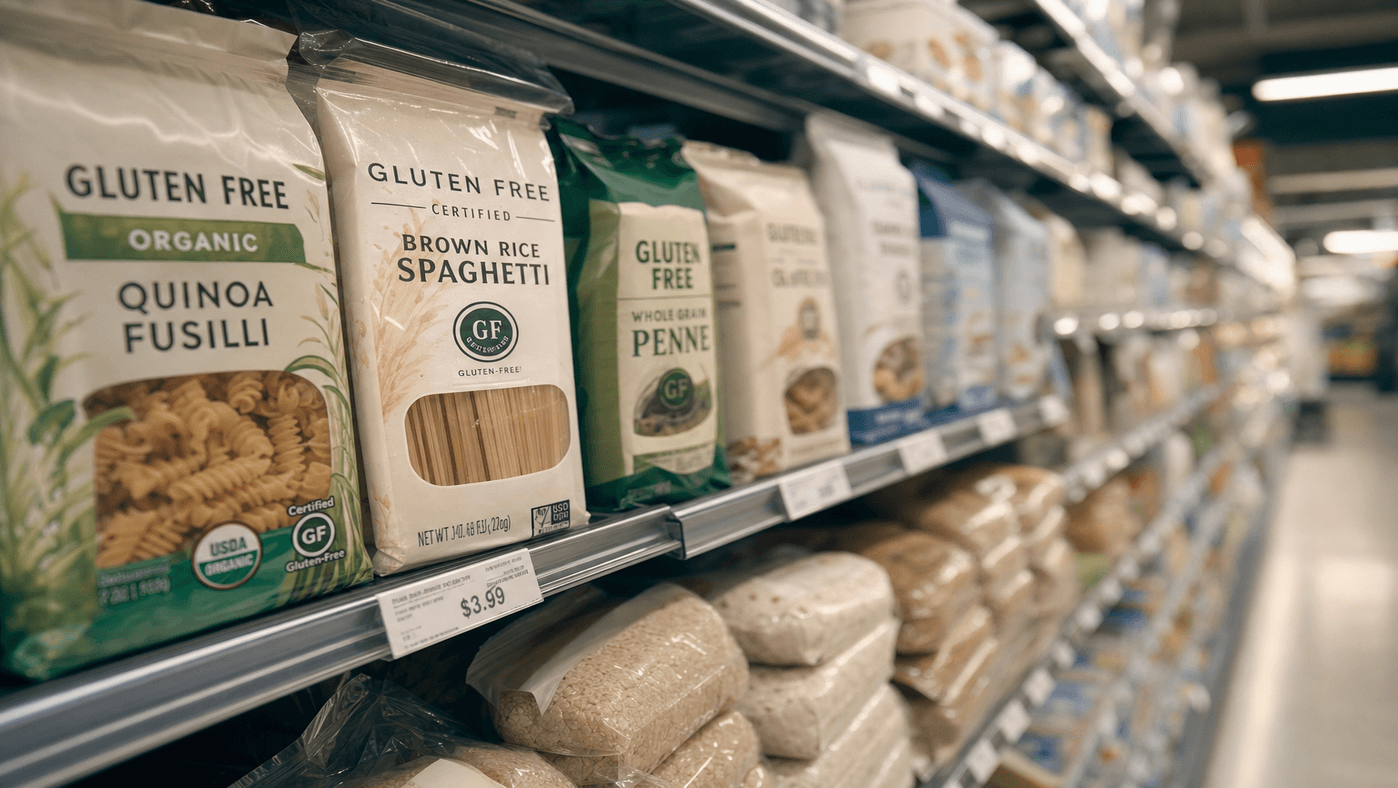
Almost nobody in our food system is required to check whether “gluten-free” food is actually gluten-free. Not the manufacturer. Not the restaurant. Not the grocery store. The one person who reliably checks is the person who gets sick if it’s wrong. That’s backwards.
The gluten-free label is a claim, not a test
Any packaged food labeled “gluten-free” in the U.S. must contain less than 20 parts per million (ppm) of gluten. But manufacturers are not required to test their ingredients or finished products before using the label. And gluten-free doesn’t mean zero. A product at 19 ppm is legally gluten-free.
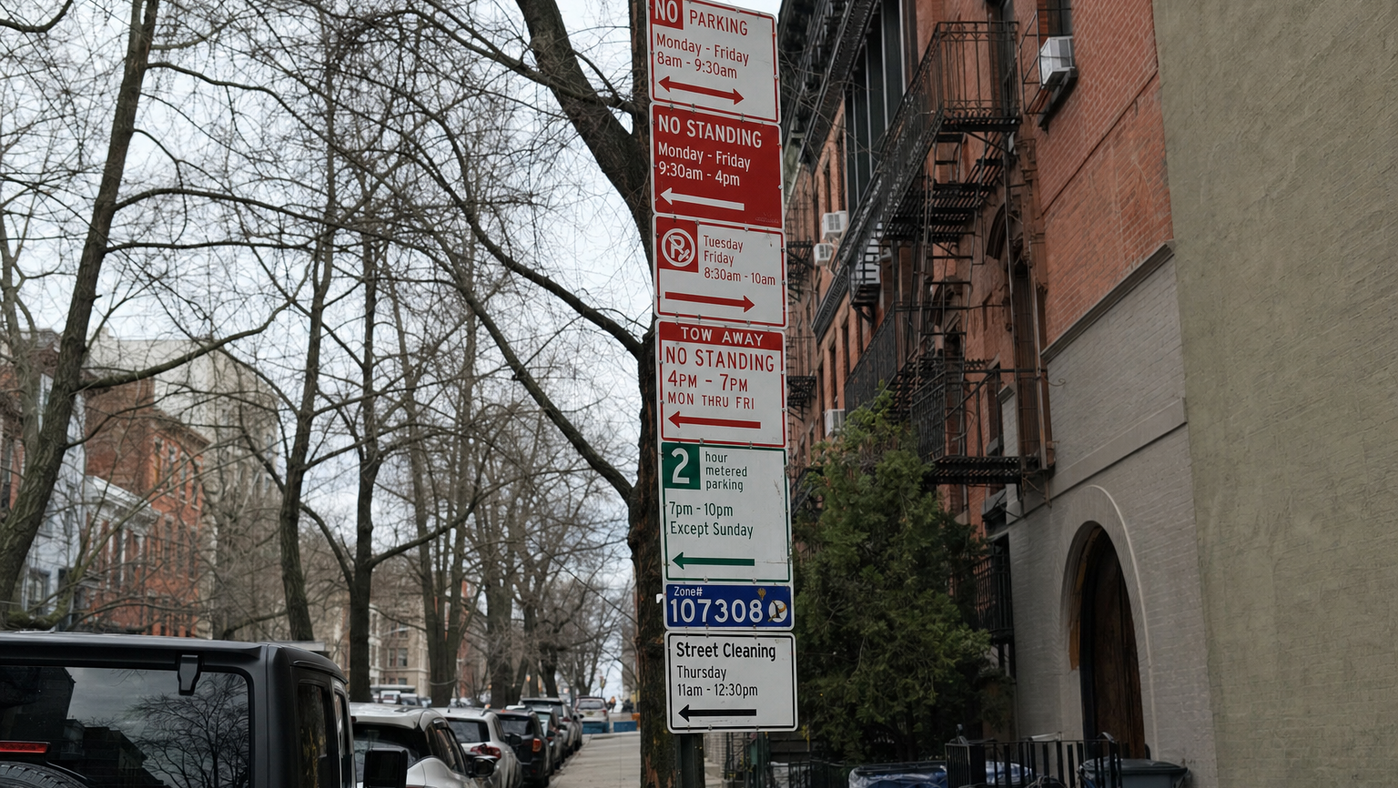
Gluten labeling works a lot like New York City parking signs, which only tell you where you can’t park. The gluten-free claim is optional, so most products say nothing. Wheat must be declared as an allergen, but barley and rye don’t get the same treatment, which is how hidden gluten slips through. Shoppers are left reading silence and hoping no news is good news.
Gluten-free certification is a real safeguard, but an optional one
Manufacturers can hire an independent certifier to verify their products and processes, then carry a seal shoppers can spot in seconds. Some programs go stricter than the law. GFCO certifies to 10 ppm, and the Gluten-Free Food Program, endorsed by the National Celiac Association, certifies to 5 ppm. But the system has limits.
- It’s optional. A missing seal means no independent certifier checked.
- The manufacturer pays, and that cost lands on a shelf price gluten-free shoppers already overpay.
- It verifies a process, not your box. Testing runs on a schedule, not on the batch in your cart.
- It mostly stops at the grocery store. Very few restaurant menus carry any verification.
Further up the chain, a small bakery usually relies on paperwork from its flour supplier. Everyone is relying on the step in front of them. Paperwork is trust, not a test.
Restaurants have the widest gap of all
For restaurants, the FDA only recommends that “gluten-free” on a menu mean the same thing as on a package. No one requires a kitchen to test a dish before it goes out. A 2019 Columbia University study of more than 5,600 restaurant dishes labeled gluten-free found the following.
- 32% had detectable gluten.
- 53% of gluten-free pizza and 51% of gluten-free pasta tested positive.
- Rates climbed from 27% at breakfast to 34% at dinner as kitchens got busier.
Not every positive broke the 20 ppm line, and the likely cause was cross-contamination, not bad intent. But the diner has no way to know which kind of positive she’s looking at. Every person should be able to eat confidently in a restaurant. Today, that responsibility belongs to the diner.
At-home gluten tests are a real tool with a real price tag
At-home gluten tests have been celebrated as a new tool in the consumer’s safety toolbox, and they’ve earned it. But look at who’s paying.
- Nima Gluten Sensor. $220 for the sensor, plus about $12 per test.
- EZ Gluten. About $12 to $14 per test.
- GlutenTox Home. About $16 to $20 per test.
Someone who eats out twice a week and tests one dish each time spends roughly $1,200 to $1,800 a year. That’s on top of gluten-free groceries that cost on average 183% more than regular versions. Why are the most vulnerable people paying the most? And why should people with celiac disease have to be their own advocates?
Yes or no isn’t the same as how much
Every one of these tests answers only one question. Was gluten detected above the device’s cutoff? None of them tell you how much gluten is in the food.
That matters because people react at different levels. Research shows 50 mg of gluten a day damages the intestine in people with celiac disease, while 10 mg is tolerated by most, but not all. A positive can’t tell a trace from a serious amount. A negative means “below this cutoff,” not zero. Consumers pay twice, once in dollars and once in uncertainty.
The burden is on the wrong side of the counter
If a restaurant isn’t on the ground floor, it has a ramp. Nobody asks a person in a wheelchair to bring their own, and nobody brings a kit to test the restaurant’s water. Those are the business’s job.
Gluten-free food is the same kind of promise. The business makes the claim, chooses the ingredients and runs the prep line. It’s the only one in a position to catch a problem before the plate goes out. The burden landed on consumers because nothing requires testing and lab results have always been slow. That explains how we got here. It doesn’t make it right.
Eating safely shouldn’t be a luxury, and it shouldn’t come with a testing bill. The burden belongs on the other side of the counter.
Sources
- FDA: Questions and Answers on the Gluten-Free Food Labeling Final Rule. fda.gov
- Celiac Disease Foundation: 10 Fast Facts About the FDA Gluten-Free Labeling Rule. celiac.org
- FARE: How to Read a Food Label. foodallergy.org
- FARE: Precautionary Allergen Labeling. foodallergy.org
- GFCO: About Us (10 ppm standard). gfco.org
- Gluten-Free Food Program (5 ppm, NCA-endorsed). glutenfreefoodprogram.com
- Gluten Free Watchdog: Restaurants and Gluten-Free Menu Claims. glutenfreewatchdog.org
- Lerner et al., Detection of Gluten in Gluten-Free Labeled Restaurant Food, Am J Gastroenterol 2019. sciencedaily.com
- Nima: product pricing. nimanow.com
- EZ Gluten: product pricing. ezgluten.com
- GlutenTox Home: product pricing (Emport). emportllc.com
- Lee et al., Persistent Economic Burden of the Gluten Free Diet, Nutrients 2019. ncbi.nlm.nih.gov
- Catassi et al., safe gluten threshold trial, Am J Clin Nutr 2007. celiac.org
- Gluten threshold dose-response study, Gastroenterology 2026. gastrojournal.org